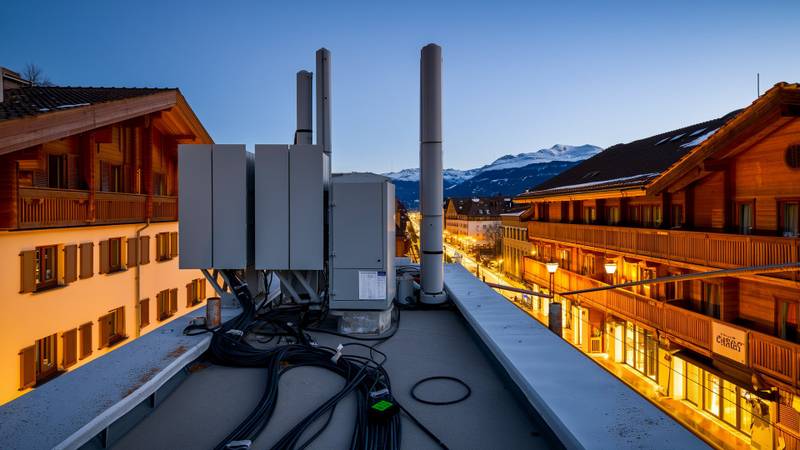
As of 1 April 2026, OFCOM has introduced new terms of use for so-called Non-Public Networks (NPN). For the first time, Swiss companies and property owners can plan and operate their own local mobile networks under clearly defined conditions – independently of Swisscom, Sunrise or Salt.
What is an NPN?
A Non-Public Network (NPN) is a local mobile network that is not publicly accessible. It works technically in a similar way to a commercial 5G network, but is restricted to a specific site or building – such as a factory hall, a logistics centre or a large residential complex.
The key difference from a public mobile network: an NPN is owned and operated by the company or institution itself, not by a telecommunications provider. Data stays within the private network, capacity is guaranteed and the configuration can be tailored to the organisation's own operations.
What did OFCOM change on 1 April 2026?
Until now, Switzerland lacked a clear regulatory framework for private local mobile networks. OFCOM has now introduced specific terms of use for NPNs covering the following points:
- Frequency allocation: companies can apply for dedicated frequency bands for their private network. Allocation is local and does not conflict with the licences of public operators.
- Authorisation process: there is now a defined application process with OFCOM. Anyone wishing to operate an NPN must specify the location, type of use and technical parameters.
- Operating requirements: operators must ensure that their network does not cause interference with public networks or other NPNs. Regular checks are planned.
- Geographic restriction: an NPN may only be active within the defined site or building. Extension into public space is not permitted.
Who can operate an NPN?
The new rules are primarily aimed at three groups:
Industrial companies and logistics operators
Factories with autonomous vehicles, robots or connected machinery need a reliable, low-latency connection. A private 5G network offers advantages over Wi-Fi or the public mobile network – especially in terms of stability and data privacy.
Large properties and real estate projects
Campus sites, hospitals, universities or large residential developments can use an NPN to connect buildings internally. This is particularly relevant when many devices need to be connected simultaneously or when sensitive data must not leave the premises.
Public institutions and infrastructure operators
Railway stations, airports or energy suppliers with large sites can also benefit from a private network – for example for controlling infrastructure or communicating with maintenance teams.
How much does an NPN cost and how complex is it to operate?
OFCOM charges fees for frequency allocation. The amount depends on the allocated frequency band and the geographic extent. In addition, there are investment costs for the network infrastructure itself: base stations, core network components and integration into existing IT systems.
Operating an NPN is technically demanding. Most companies will rely on specialised system integrators. Some telecommunications providers also offer managed NPN services, where they build and operate the private network on behalf of the company – the difference from the public network remains, however, because capacity is dedicated and data stays local.
What does this mean for ordinary consumers?
For private individuals with a standard mobile subscription, the new NPN rules change nothing directly. The new regulation affects the B2B sector and large properties. Tenants or residents of a large site who benefit from an NPN in future will notice it at most through better network coverage inside the building.
Anyone looking for a standard mobile subscription continues to rely on the public networks of Swisscom, Sunrise and Salt.
Conclusion
OFCOM's new NPN rules are an important step for the digitalisation of Swiss industry and the real estate sector. Companies that previously depended on Wi-Fi or the public mobile network now have a clear legal basis for investing in their own local 5G infrastructure. The authorisation process is defined, the requirements are transparent – it is now up to companies to make use of the opportunities.
Anyone interested in the technical details can find the full terms of use directly at OFCOM.