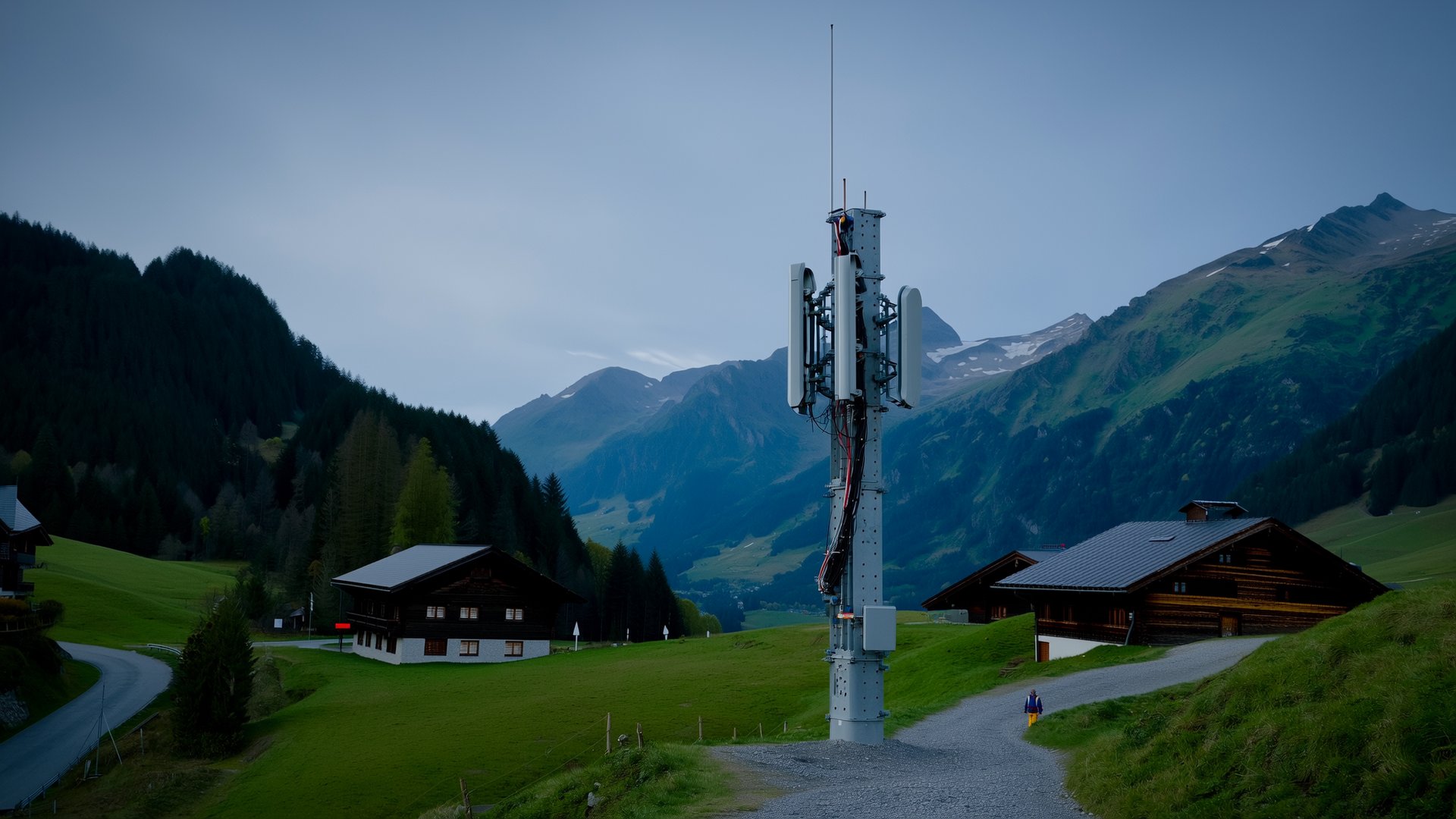
Sunrise Salt network cooperation: what it could mean for reception in rural areas
Sunrise and Salt are reviewing a collaboration involving their mobile networks. Such a Sunrise Salt network cooperation could be relevant in the long term, particularly for rural and sparsely populated regions: expanding individual sites is often complex there, while demand for reliable reception continues to grow.
Important for customers: the announced review is not yet an implemented network cooperation. Subscriptions, prices, SIM cards and current reception will not change for the time being. Whether, where and in what form Sunrise and Salt actually work together will depend on the results of the evaluation, technical agreements and any possible regulatory approvals.
What Sunrise and Salt have announced so far
According to information from Sunrise and Salt, a possible cooperation involving the mobile network is being reviewed. This does not automatically mean a fully shared network or a merger of the two providers. Depending on the model, different forms of collaboration could be considered, for example involving mobile sites, antenna installations or the development of specific areas.
In practice, an announcement that a review is under way means:
- The providers are clarifying technical, economic and legal questions.
- It has not yet been decided which infrastructure might be shared.
- There is no binding timetable yet for concrete improvements in individual locations.
- Customers will initially remain with their current provider and existing subscription.
Salt refers to the planned review in its media releases. On its information page about the mobile network cooperation, Sunrise explains what the discussions are intended to mean for existing customers.
Why cooperation could be particularly interesting in rural areas
In cities, mobile network installations are relatively close together. Many users share the same capacity, but building and operating a site also serves many households, businesses and commuters at the same time. In mountain regions, remote valleys or smaller villages, the situation is different.
There, large distances, topographical obstacles, protection requirements and approval procedures can make expansion more difficult. An additional site involves high costs, even though it may serve only a small number of households. If two providers share parts of the infrastructure, they could plan expansion more economically and avoid duplication.
Possible benefits of implementation could include:
- Better geographical coverage: Areas with patchy reception today could be covered more easily.
- Faster expansion: If existing sites are shared or expanded jointly, a completely new mast is not always needed.
- More robust coverage: Additional or modernised infrastructure can improve network quality in heavily used locations.
- More efficient use of resources: Fewer parallel installations can reduce the impact on the landscape and the amount of construction work.
This does not guarantee better reception at every address, however. Mobile connectivity always depends on the specific location: terrain, distance from the antenna, building insulation, the frequencies used and network load all affect the actual quality.
Shared infrastructure does not automatically mean the same network
The term network cooperation can mean different things. For customers, it is therefore important not to jump to the conclusion that there will be one shared mobile network.
With limited cooperation, Sunrise and Salt could, for example, share masts, antenna sites or the power supply. The technical networks, frequencies, tariffs and services could still remain separate. In a more extensive cooperation, active network operations could also be coordinated in certain regions. Which option is being reviewed, and whether it will be implemented, remains open at this point.
Even when sites are shared, it remains relevant which network your provider supplies at a specific location. A Salt subscription does not automatically become a Sunrise subscription – and vice versa. When choosing an offer, you should therefore continue to compare network coverage, data volume, price and use abroad. You can find an overview in the mobile subscription comparison and the comparison.
What will not change for existing subscriptions for the time being?
The most important message for existing customers is: nothing will change immediately for the time being. Reviewing a cooperation does not automatically result in a tariff change or new contractual conditions.
This applies in particular to:
| Area | Situation during the review |
|---|---|
| Mobile subscription | Your existing subscription remains in place. |
| Monthly price | No immediate price change has been announced solely because of the review. |
| SIM card and number | No change is required. |
| Reception | No immediate, nationwide improvement should be expected. |
| Customer service and bill | You remain with your respective provider. |
If concrete expansion measures are introduced later, they are likely to become visible gradually and vary from region to region. Anyone who currently has poor reception at home should therefore not rely on a short-term solution resulting from the announced cooperation.
Regulatory questions could be decisive
Mobile network cooperation concerns a market of great importance for competition and universal service. Depending on its structure, regulatory reviews or approvals may therefore be required. The relevant authorities could include those responsible for telecommunications and competition.
Among other things, the question is whether cooperation would facilitate network expansion without restricting competition for customers. Cooperation can encourage investment in areas that are not very profitable. At the same time, it must be ensured that Sunrise and Salt continue to offer independent services and that customers have a genuine choice.
Such procedures can take time. Even after a positive decision, technical planning, local approvals and construction work would still be required. Several months or longer could therefore pass between the announcement and a noticeable improvement in network coverage.
What you can do now
If reliable reception in rural areas is important to you, check the current situation rather than waiting for possible future changes.
- Compare network coverage at your home address, workplace and on routes you use frequently.
- Keep in mind that coverage maps provide guidance but do not guarantee reception inside every building.
- If possible, test reception with a prepaid SIM card or an offer that can be cancelled.
- If you switch, also check the conditions for data usage abroad, the minimum contract term and the notice period.
The Sunrise Salt network cooperation could, in the medium term, help make expansion projects in rural regions easier to implement. For now, however, it remains an announced review. For your subscription and current reception, the decisive factor therefore remains the network quality that is actually available at your specific location.