You live in a dead zone, the reception in your basement or old building is terrible, and you've bought a mobile signal booster – or you're considering it. Then you should know: since 1 January 2026, stricter rules apply in Switzerland for operating such devices. OFCOM has updated the requirements, and anyone who doesn't comply risks fines and interference across the entire mobile network. This guide explains what has changed, which devices are still legal and what you need to do if you want to operate a booster.
What is a mobile signal booster?
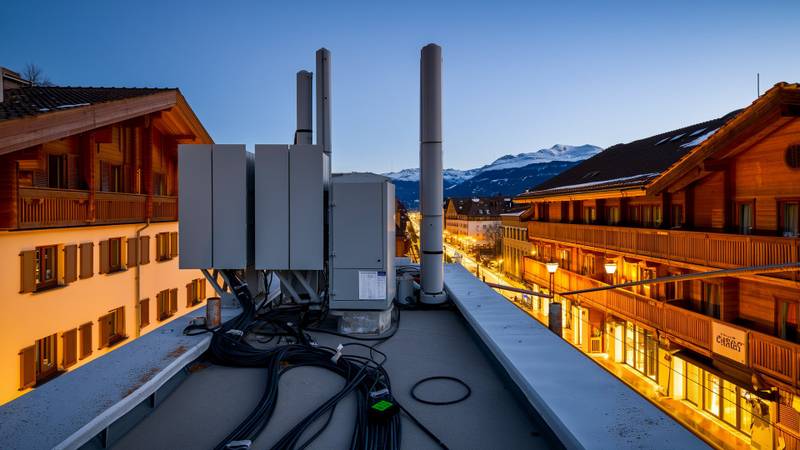
A mobile signal booster – also known as a repeater or booster – receives the mobile signal via an outdoor antenna, amplifies it and distributes it inside a building. That sounds simple, but it's technically tricky: a poorly configured device can disrupt the mobile operator's network, cause connection drops for neighbours and, in the worst case, overload an entire cell tower.
That's precisely why OFCOM regulates these devices strictly – and tightened the rules again at the start of 2026.
The new OFCOM rules since 1 January 2026
What has changed?
The Federal Office of Communications (OFCOM) has updated the technical requirements for mobile signal boosters and repeaters. The key points:
- Only certified devices may be operated. These are devices that comply with the European standard EN 62369 and the relevant RED directives, and bear the CE marking.
- Uncontrolled cheap devices from online shops without CE marking are prohibited – this was already the case before, but has been enforced more actively since 2026.
- Coordination with the network operator is mandatory: anyone operating a booster must notify their mobile operator (Swisscom, Sunrise, Salt). Without coordination, operation is illegal.
- Transmission power and frequency bands must remain within the limits set by OFCOM. Devices that amplify multiple frequency bands simultaneously are subject to particularly strict requirements.
- Commercial installations in hotels, office buildings or shopping centres additionally require a formal permit.
What applies to existing devices?
If you already operate a booster installed before 2026, a transitional period applies – but not an unlimited one. Devices that do not meet the new technical requirements must be taken out of service or replaced. OFCOM recommends checking existing installations and upgrading them if necessary.
Legal vs. illegal devices: how to tell the difference
Not every booster you can buy online is permitted to be operated in Switzerland. Here are the key distinguishing features:
| Feature | Legal device | Illegal device |
|---|---|---|
| CE marking | Yes, visible on device and packaging | Missing or counterfeit |
| Declaration of conformity | Included, available on request | Not available |
| Frequency bands | Only approved CH bands | Often too many or incorrect bands |
| Transmission power | Within OFCOM limits | Often excessive |
| Operator coordination | Possible and provided for | Often technically not feasible |
| Price | From approx. CHF 300–500 for quality devices | Often under CHF 50–100 |
Stay away from devices without CE marking, without a declaration of conformity or from unknown manufacturers without Swiss distribution. OFCOM can confiscate such devices and impose fines.
How to register your booster correctly
Registration isn't a bureaucratic nightmare, but it is mandatory. Here's how to proceed:
Step 1: Buy the right device
Buy a booster that is explicitly approved for the Swiss market. Look for CE marking, a declaration of conformity and the supported frequency bands (relevant in Switzerland: 700 MHz, 800 MHz, 900 MHz, 1800 MHz, 2100 MHz, 2600 MHz, 3500 MHz for 5G).
Step 2: Contact your network operator
Get in touch with your mobile operator – Swisscom, Sunrise or Salt – and inform them of your planned installation. The operators have their own processes for this. They check whether your device is compatible with their network and provide you with technical parameters (e.g. maximum gain).
Step 3: Professional installation
The outdoor antenna must be aligned to receive the signal from the nearest cell tower as effectively as possible. The indoor antenna distributes the amplified signal throughout the building. Important: the outdoor antenna and the indoor antenna must not be able to "see" each other (feedback risk), otherwise a feedback loop is created that disrupts the network.
Step 4: Monitor operation
After installation, check that reception has improved and that no interference occurs. Many quality devices have an app or web interface through which you can monitor the system status.
When does a booster make sense – and when doesn't it?
A mobile signal booster is not always the best solution. Here's an honest overview:
A booster makes sense if …
- you live in a building with thick concrete walls or metal facades that shield the signal
- you have good reception outside the building (at least 1–2 bars) but barely any signal inside
- you rely on mobile connectivity and cannot use WLAN Calling
- you want to provide uniform coverage in a larger building (apartment block, commercial premises)
A booster won't help if …
- you live in a genuine dead zone where there is no signal even outside the building – there is nothing to amplify
- the problem lies with your device or your SIM card
- you only have poor reception occasionally (e.g. only in the basement)
Alternatives to a mobile signal booster
Before investing in a booster, consider these alternatives:
- WLAN Calling (VoWiFi): Swisscom, Sunrise and Salt support calls over Wi-Fi. If you have a compatible smartphone, you can make calls via your home network in areas with poor reception – free of charge and without any additional device.
- Switch provider: Sometimes the problem isn't the building but the network. Not all providers have the same coverage. It's worth taking a look at the mobile plan comparisons.
- Femtocell: Some operators offer so-called femtocells – small base stations that run over your broadband connection and generate their own mobile signal. They are legal because they are provided by the network operator itself.
- Change location: Sometimes it's enough to use your smartphone in a different spot in the room or to attach an external antenna near a window.
What are the consequences of violations?
In the event of illegal operation of a booster, OFCOM can:
- confiscate the device
- impose a fine
- require the operator to cover the costs of any interference caused
This may sound harsh, but there's a good reason: a single poorly configured booster can disrupt dozens of mobile users in a densely populated area. OFCOM actively investigates such interference.
Conclusion: solve reception problems – but do it right
A mobile signal booster can be a genuine solution in certain situations – but only if you buy the right device, register it with your network operator and install it correctly. The new OFCOM rules in force since January 2026 are not bureaucratic red tape; they protect the network for all users.
Before you invest: first check whether WLAN Calling or switching provider solves your problem. If you're unsure which provider offers the best coverage in your area, the mobile plan comparison on zufriedenmit.ch can help you find out.