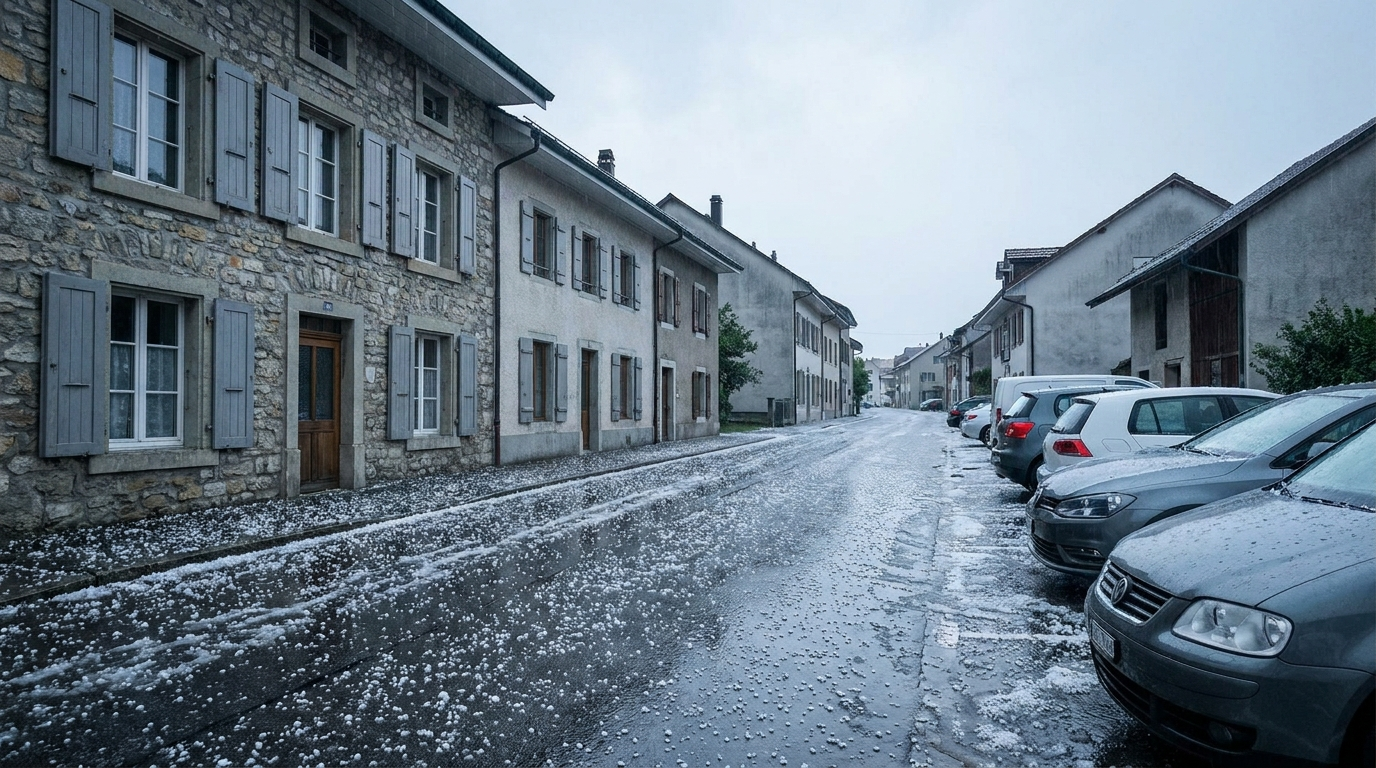
On Friday morning a cold front moved across German-speaking Switzerland. In parts of the cantons of Solothurn, Aargau and Zurich, hailstones the size of golf balls came down: shattered rear windows, destroyed slatted blinds, dislodged roof tiles, flooded underpasses and interruptions to rail traffic.
If you have been affected, the next few hours decide how smoothly the claim goes. Not because a statutory deadline is running, but because insurers process thousands of claims in parallel after a major event, and because the most common mistakes all happen on day one. This checklist walks you through it.
The basic rule: the damaged object decides, not the cause
This is where most people go wrong. In Switzerland, hail counts as a natural hazard event and is regulated uniformly nationwide. But who pays does not depend on the hail. It depends on what broke.
| What was damaged | Who normally pays |
|---|---|
| Roof, façade, roof windows, blinds and shutters fixed to the building | Building insurance |
| Furniture, clothing, electronics, garden furniture, bike, grill | Household contents insurance |
| Car, motorbike, camper van | Partial casco |
| Plants, lawn, garden landscaping, free-standing structures | Additional cover required, otherwise not insured |
Anything permanently fixed belongs to the building, anything movable belongs to contents. An awning fixed to the façade is building. The parasol on the terrace is contents. The distinction sounds pedantic, but it determines who is responsible and which deductible applies.
Step 1: take immediate action
You have a duty to mitigate. You must prevent one loss from turning into a larger one: temporarily cover a smashed roof window, remove standing water, switch off the electrics in a flooded cellar. The cost of such reasonable emergency measures is normally covered.
The boundary matters: emergency measures yes, repairs no. A loss adjuster cannot assess a spot that has already been repaired.
Step 2: document everything before you touch anything
- Photograph the damage from several angles, including overview shots of the building or vehicle
- Record the exact date and time of the incident
- Collect purchase receipts and serial numbers for damaged items
- Throw nothing away, not even an obviously destroyed device
- Save a screenshot of a severe weather warning for your region as evidence that hail actually fell on that date
The last point is underrated. In a large-scale event the weather situation is documented anyway. For small local cells, proof can become the point of dispute.
Step 3: report it to the right place
Building: in most cantons, building insurance is compulsory and runs through the cantonal insurance institution. In the canton of Zurich this is the GVZ, where every building worth CHF 5'000 or more is insured. Have the building address and building number, the date of loss, the cause, the extent and a contact person ready. In the cantons AI, GE, OW, SZ, TI, UR and VS there is no cantonal institution, and building insurance is taken out with a private insurer instead.
Contents: directly with your insurer, usually online or by phone. Household contents insurance is voluntary in Switzerland in principle, but compulsory in the cantons of Fribourg, Jura, Nidwalden and Vaud. Without it, damage to movable property is yours to carry.
Car: with your motor insurer, as quickly as possible.
Report every loss promptly. There is no rigid deadline in days, but a late report complicates assessment and can, in extreme cases, reduce the payout.
Step 4: what you end up paying yourself
For natural hazard damage a statutory deductible of CHF 500 per event applies. It is set out in the supervisory ordinance and applies regardless of what you otherwise agreed with your insurer. For building damage on the open market, the deductible for private individuals is often 10 per cent of the loss amount, with a minimum of CHF 500.
Two points that matter in a major event:
- If the total of all natural hazard claims from a single event in Switzerland exceeds one billion francs, payouts are reduced proportionally. With exceptional hail corridors this is not purely theoretical.
- If you are underinsured because your contents sum has not been adjusted for years, you will only be compensated proportionally. Check the insured sum before you file.
Special case car: filing is almost always worth it
For the car, partial casco pays. Liability-only cover does not include hail. Full casco includes partial casco.
The decisive point most people do not know: partial casco claims generally do not affect your bonus level. Unlike a collision you caused yourself, a hail claim normally does not raise your premium. The instinct to pay out of pocket for fear of losing your no-claims discount is usually wrong here.
Two rules:
- Never commission a repair before the insurer has inspected the dents
- You can usually choose between repair and a cash settlement. For an older car you plan to replace anyway, the cash settlement may make more sense
After larger hail events, insurers set up temporary inspection points and process cases in batches. Reporting early means being seen earlier.
The four most common coverage gaps
The garden. Plants, lawn, shrubs and free-standing garden structures fall under neither building nor contents insurance. That requires additional cover, called crop casco or landscaping cover depending on the insurer.
Water in the cellar. Only surface water entering the building counts as natural hazard damage. If the water comes from a sewer backup, rising groundwater or a defective drain, natural hazard cover does not apply. That needs separate building water damage insurance.
Rain through an open window. Leave the window open and suffer water damage in the room, and you are generally on your own. That is not natural hazard damage.
Surge without a direct lightning strike. If lightning hits a nearby power line and destroys your electronics, not every policy covers it. Some contracts only cover a direct strike on the building. That is the single most important sentence in your terms and conditions, and probably the one you have never read.
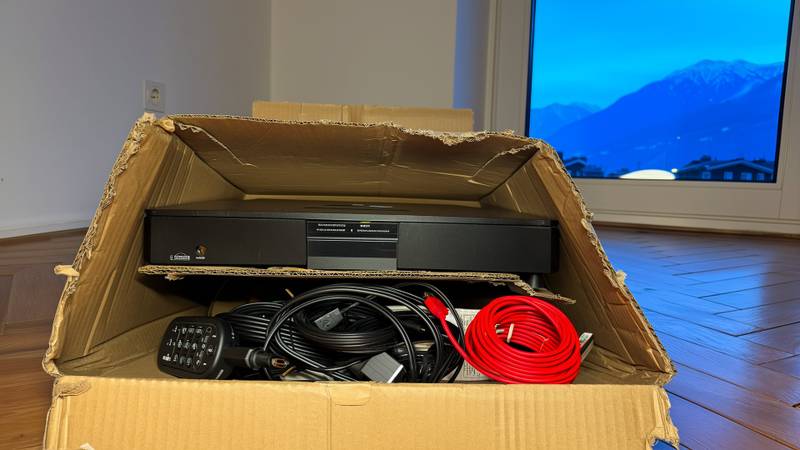
If the router, TV box or television is affected
Movable electronics belong to contents. For routers and TV boxes there is a second question: do you actually own the device? Most Swiss providers use a loan model and replace defective devices free of charge. Swisscom, by contrast, transfers ownership of the router and TV box to you, so after the two-year warranty you pay for the replacement yourself. Our overview of WiFi routers from Swiss providers shows which provider uses which model.
The practical advice: report the fault to your provider first, before filing with your contents insurer. If the provider replaces the device free of charge, you never need to trigger the CHF 500 deductible. If you are considering switching anyway, our internet provider comparison shows who supplies hardware on loan.
For the next storm
- Fully retract blinds as soon as a thunderstorm warning is issued, slatted and sun blinds are particularly vulnerable
- Move vehicles into a garage or under a solid roof
- Secure garden furniture, grill and parasol
- Plug electronics into a power strip with surge protection
- Install a weather warning app, hail cells often arrive with very little lead time
- Check once a year that your contents sum still matches your actual inventory
This article is general orientation and not insurance advice. The actual scope of cover follows exclusively from your policy and the general insurance conditions. When in doubt, a call to your insurer is faster than any amount of research.