5G coverage in Switzerland matters when comparing mobile plans, but a high percentage alone does not show whether a network suits you. What counts is reception at home, along your commute and wherever you use your phone intensively. A 5G icon on the display does not automatically mean maximum speed.
4G remains Switzerland’s essential mobile network. 5G adds capacity and speed, while 5G+ generally uses higher-performance frequencies. Whether you need such a plan depends mainly on how you use your phone.
The key insight: coverage is not the same as reception
Operators usually state coverage as the share of the population served. This does not mean that the same share of Switzerland’s land area receives the same quality. Mountains, valleys, basements, trains and densely built-up neighbourhoods can look very different. Reception can even vary between flats in the same building.
For choosing a plan:
- National coverage figures show the general size of the network.
- The network map shows what is likely to be available at a specific address.
- An independent network test shows how the network performs under real conditions against its competitors.
- Your usage profile determines whether 4G is enough or 5G and 5G+ provide added value.
Before choosing a plan, check the relevant operator’s map for home, work and regular routes. You can then compare offers by included data and other services in our mobile plan comparison.
What 4G, 5G and 5G+ mean in practice
4G/LTE: the reliable standard for almost all everyday tasks
4G, also known as LTE, is practically available across Switzerland. According to the Federal Communications Commission ComCom, Swisscom, Sunrise and Salt each cover around 99% or more of the population with 4G.
A good 4G connection is usually enough for messaging, email, navigation, online banking, music streaming, video calls and normal video streaming. It can also work as an occasional laptop hotspot if reception is stable and the plan includes enough data.
Lower frequencies often reach buildings and rural areas better than high 5G frequencies. If your phone often shows only 4G in a basement, holiday home or remote area, that is not automatically a bad sign. Stability and reliable app performance matter more.
5G: more capacity, not always more speed
5G can provide higher data rates, shorter response times and, above all, more capacity. This is useful at railway stations, in city centres, at major events and in densely populated neighbourhoods.
ComCom’s overview indicates 5G population coverage of around 86% for Swisscom, 80% for Sunrise and 70% for Salt. These figures are a guide and do not replace checking your address.
5G is particularly useful if you often download large files, stream in high resolution, use your phone as a hotspot or regularly visit heavily loaded locations. For chatting, listening to music, browsing websites and occasional navigation, the difference from good 4G is often small.
Many plans also limit speed. Check not only whether “5G included” is stated, but also the specified speed and any options for faster 5G.
5G+: higher performance in smaller areas
In Switzerland, 5G+ refers to particularly powerful 5G areas. Higher frequencies are often used, for example around 3.5 GHz. They can enable much higher speeds and capacity, but have a shorter range and generally penetrate buildings less effectively.
5G+ coverage is therefore considerably smaller than general 5G coverage. It is most relevant in city centres, railway stations, business districts and other high-demand areas.
5G+ is not essential for a normal mobile plan. It is more worthwhile if you regularly transfer large amounts of data or often use your phone as Internet access for other devices. You always need:
- a 5G+-compatible smartphone;
- a plan that does not restrict the faster access;
- actual 5G+ coverage at your location;
- sufficiently good reception in the specific surroundings.
How to interpret the Swisscom, Sunrise and Salt figures
The following figures summarise the population coverage published by ComCom. They are neither measurements for every individual home nor a guarantee of a specific data rate.
| Network | 4G coverage | 5G coverage | Everyday meaning |
|---|---|---|---|
| Swisscom | around 99% | around 86% | Very extensive network, particularly relevant for frequent travel in rural or topographically challenging regions. |
| Sunrise | around 99.98% | around 80% | Very high 4G coverage and broad 5G availability; local checking remains decisive. |
| Salt | around 99.9% | around 70% | 4G is widely available; with 5G, regional differences may matter more than with the more developed networks. |
The figures come from ComCom’s mobile coverage overview. Operators are continuously expanding their infrastructure. For a new plan, the current map is therefore more important than an older national comparison.
What independent network tests add
Coverage maps are based on modelling and operator information. Independent tests add measurements in cities, rural areas, buildings and along transport routes.
The connect mobile network test 2026 evaluates Swiss networks for voice, data and different usage scenarios. Such tests consider stability, response time and performance under load, not just maximum speed.
A network can therefore perform very well nationally but work less well at your workplace. There is no contradiction: nationwide tests show general network quality, while your address and route determine individual usefulness.
Which network fits your everyday life?
You mainly live and work in a city
4G and 5G are usually well developed in cities. For normal use, first compare price, data volume, roaming and the speed included in the plan. 5G can be useful, but 5G+ is rarely decisive.
Still, check reception in your home. In particular, energy-efficient glazing, underground car parks and densely built-up neighbourhoods can make indoor coverage more important than the national 5G percentage.
You regularly commute by train or car
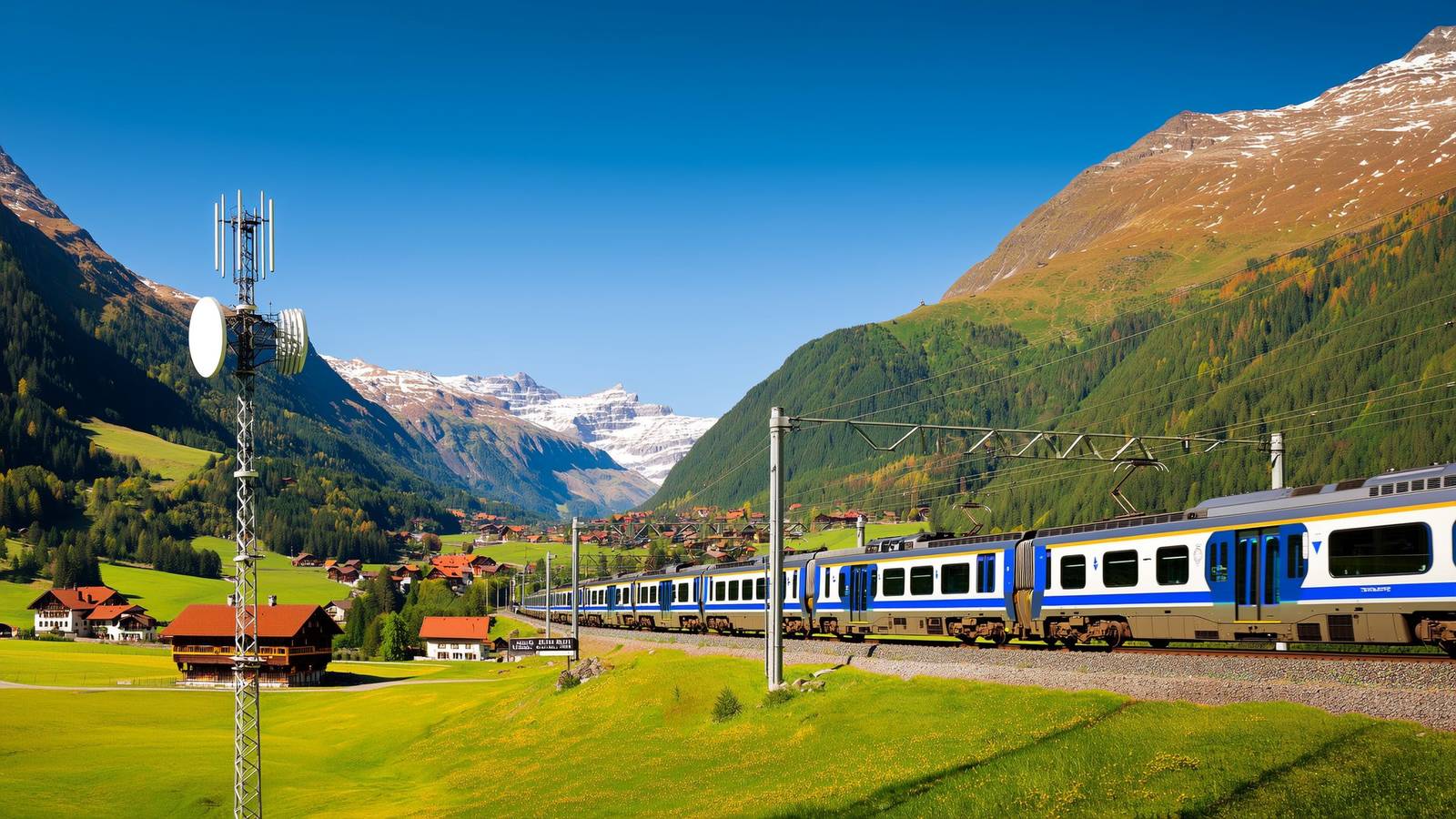
For commuters, network quality matters along the entire route. Check tunnels, railway lines, motorways and interchange stations. Video calls, ticket purchases, hotspot work and streaming benefit more from stable reception than from a theoretically high peak speed.
A network with strong 4G along your route may suit you better than a cheaper 5G plan with gaps there. Also check which network powers the offer you are considering.
You often use your phone as a hotspot
5G is much more interesting for hotspot use. With good coverage, it provides more headroom for video conferences, cloud backups, large downloads and several connected devices. Check the data allowance, effective maximum speed, possible throttling and whether 5G access is included without an extra charge.
You are often in mountain, rural or holiday regions
The specific network map is especially important here. Lower frequencies and a dense 4G network are often more important for reliable basic coverage than 5G+. If you need to make calls or navigate in remote areas, check voice coverage as well as data coverage.
Different rules apply abroad. Swiss network coverage says nothing about your roaming package. If needed, compare travel benefits in our plan comparison.
Checklist before changing your mobile plan
- Check the network map for home, work and frequent routes.
- Ask flatmates, neighbours or colleagues about their real experience in the building.
- Decide whether good 4G is enough or whether 5G offers a genuine benefit for hotspots and heavy data use.
- Compare the speed allowed by the plan, not just the word 5G.
- Check data volume, throttling and roaming separately from the network question.
- Choose 5G+ as a criterion only if you demonstrably benefit from it in your usual locations.
Conclusion: good 4G beats theoretical 5G
For most people in Switzerland, a stable 4G network is still perfectly sufficient. 5G is worthwhile if you frequently transfer lots of data, spend time in heavily used locations or regularly use your phone as a hotspot. 5G+ is a performance bonus for certain locations and usage profiles, not a general quality indicator for every plan.
When considering 5G coverage in Switzerland, it therefore does not matter only which network reports the highest national figure. What matters is whether it works where you live, commute and actually need your phone.